
Cosmetic Colours: Applications, Types & Benefits
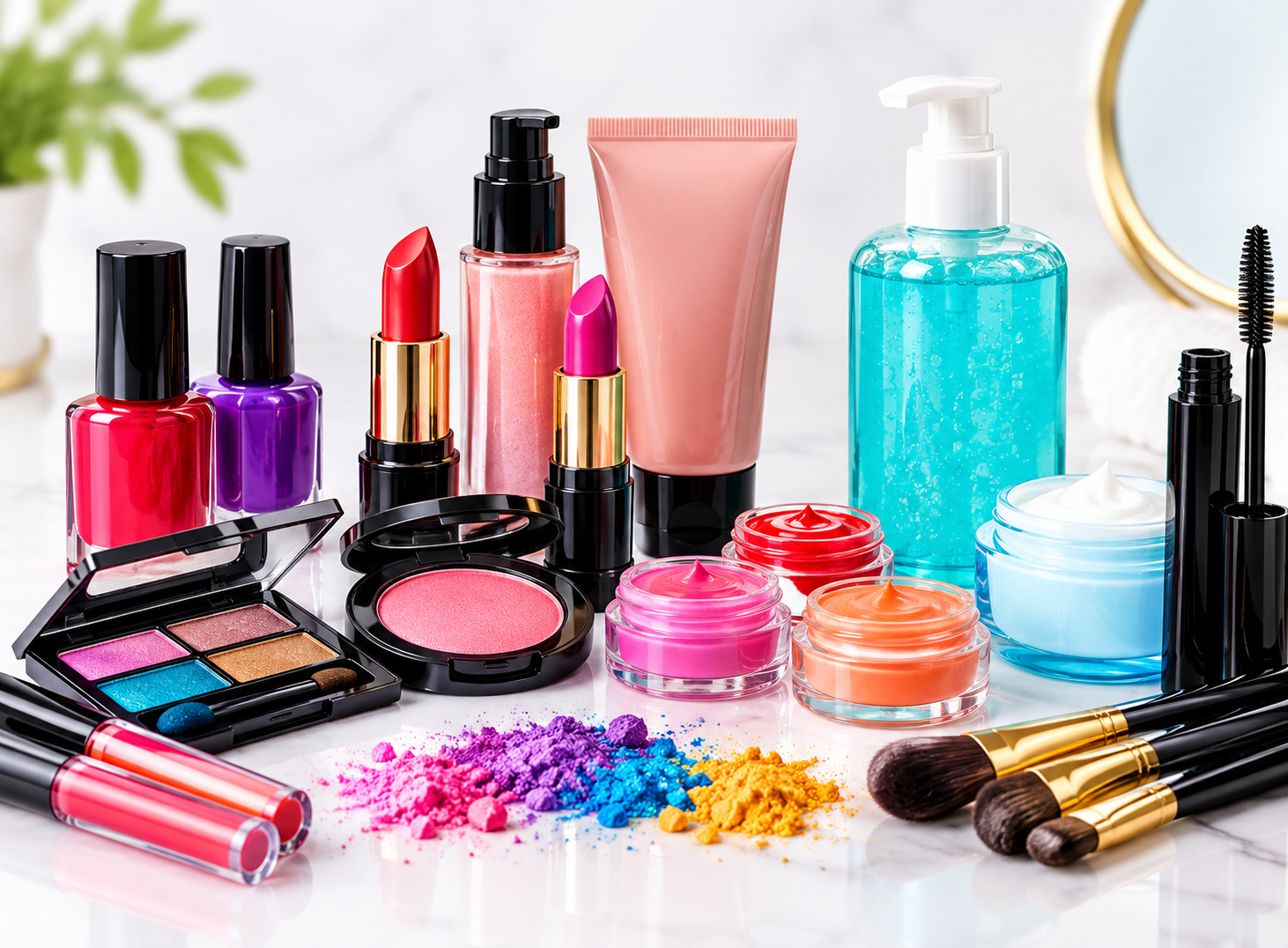
Colour plays an important role in the cosmetic and personal care industry. From vibrant lipsticks and colourful eyeshadows to shampoos, shower gels and creams, cosmetic colours help create attractive products and distinctive shades.
Cosmetic colours are specially selected colourants designed for use in cosmetic and personal care formulations, subject to the applicable regulatory requirements of the intended market.
Sunshine Chemicals supplies a range of colours for cosmetic and personal care applications, helping manufacturers achieve attractive, consistent and uniform shades.
What Are Cosmetic Colours?
Cosmetic colours are colourants used to impart or enhance colour in cosmetic and personal care products. Depending on the formulation, manufacturers may use different types of colourants, including water-soluble dyes, oil-dispersible colours, pigments and other permitted colour additives.
The choice of colour depends on:
- Type of cosmetic product
- Base formulation
- Desired shade
- Solubility or dispersion requirements
- Processing conditions
- Colour stability
- Applicable cosmetic regulations
Why Are Colours Used in Cosmetics?
Colour is an important part of the overall appearance and presentation of cosmetic products.
Attractive Product Appearance
Vibrant and consistent colours can make cosmetic products visually appealing and help create distinctive product ranges.
Shade Development
Cosmetic manufacturers can combine different permitted colours to develop a wide variety of shades for makeup and personal care products.
Product Differentiation
Different colours can help brands distinguish product variants, fragrances, formulations and product lines.
Consistent Manufacturing
Quality cosmetic colours can help manufacturers achieve consistent colour from batch to batch when properly formulated and processed.
Applications of Cosmetic Colours
Cosmetic colours are used across a wide range of beauty and personal care products.
1. Lipsticks & Lip Balms
Colours are widely used in lip products to create shades ranging from soft pinks and nudes to reds, oranges, browns and deeper shades.
2. Lip Gloss
Cosmetic colours can be incorporated into lip gloss formulations to create transparent, translucent or stronger colour effects, depending on the formulation.
3. Eye Makeup
Colours are an important component of products such as:
- Eyeshadows
- Eyeliners
- Eye pencils
- Mascara
- Other decorative eye products
4. Nail Polish
Permitted colourants and pigments can be used to create a broad range of nail polish shades, including vibrant, metallic and pastel effects.
5. Foundations, Blush & Makeup Products
Cosmetic colourants and pigments are used in makeup products to develop different shades and visual effects.
6. Face Wash & Cleansing Products
Colours may be used in selected face washes, cleansing gels and other cosmetic cleansing products to enhance their appearance.
7. Shower Gels & Body Wash
Vibrant colours can be used in shower gels and body washes to create attractive product appearances and differentiate variants.
8. Shampoos & Conditioners
Depending on the formulation, cosmetic colours can be used to provide a consistent and appealing appearance to shampoos and conditioners.
9. Creams & Lotions
Colours may be used in selected cosmetic creams, lotions and other personal care formulations where colouring is appropriate and permitted.
10. Soaps
Cosmetic colours are commonly considered for decorative and coloured soaps, including bathing soaps and specialty personal care products.
Types of Cosmetic Colours
Different types of colourants can be selected depending on the formulation.
Water-Soluble Colours
These colours dissolve in water-based formulations and can be suitable for selected products such as gels, shampoos, liquid soaps and other aqueous cosmetic formulations.
Oil-Dispersible Colours
Oil-dispersible colours can be considered for formulations containing oils and other oil-based ingredients where water-soluble colours are not appropriate.
Pigments
Pigments are insoluble colourants that are dispersed throughout a formulation. They are widely used in decorative cosmetics where strong opacity, coverage or specific visual effects are required.
Special-Effect Colours
Certain cosmetic formulations may use special-effect pigments to create visual effects such as shimmer, pearl, metallic appearance or colour variation, subject to applicable regulations.
How to Choose the Right Cosmetic Colour
Selecting the correct colour requires consideration of the complete formulation.
Manufacturers should evaluate:
- Product type
- Water or oil phase
- Desired shade
- Colour strength
- Solubility or dispersion
- pH of the formulation
- Processing temperature
- Light and storage stability
- Compatibility with other ingredients
- Applicable cosmetic regulations
A colour should be tested in the final formulation before commercial production.
Importance of Colour Stability
Colour stability is an important consideration in cosmetic manufacturing. The finished shade can be affected by factors such as:
- pH
- Heat
- Light exposure
- Oxidation
- Other formulation ingredients
- Packaging
- Storage conditions
Proper colour selection and formulation testing can help manufacturers achieve more consistent results throughout the intended shelf life.
Cosmetic Colours for Personal Care Products
Beyond decorative cosmetics, colours are also used in various personal care products. Depending on the formulation and regulatory requirements, applications may include:
- Hand wash
- Shower gel
- Body wash
- Shampoo
- Conditioner
- Liquid soap
- Bath products
- Face wash
- Creams
- Lotions
- Soaps
The colour used should always be appropriate for the specific product and permitted for the intended cosmetic application and market.
Cosmetic Colours from Sunshine Chemicals
Sunshine Chemicals supplies colours for cosmetic and personal care applications, helping manufacturers develop attractive and consistent product shades.
Our colour solutions can be considered for a wide range of applications, from decorative cosmetics to personal care products.
We work with customers to understand their requirements, including the desired shade, formulation type and application, so that an appropriate colour option can be selected.
Quality & Regulatory Considerations
Cosmetic colourants must comply with the regulations applicable to the intended product and market.
Before using a colour in a cosmetic formulation, manufacturers should verify:
- Whether the colour is permitted for the intended cosmetic application
- Permitted concentration or usage restrictions
- Applicable purity specifications
- Country-specific cosmetic regulations
- Product documentation and specifications
Regulatory requirements can vary between countries and between different cosmetic applications.
- cosmetic colours
- cosmetic colors
- cosmetic colour manufacturer
- cosmetic colour supplier
- cosmetic colors supplier
- cosmetic colours manufacturer in India
- colours used in cosmetics
- cosmetic colourants
- cosmetic pigments
- colours for cosmetics
- colours for personal care products
- cosmetic colours for makeup
- cosmetic colours for soap
- cosmetic colours for shampoo
- cosmetic colours for shower gel
- cosmetic colours for creams
- cosmetic colour supplier in India
- cosmetic colour manufacturer in India
- cosmetic colours manufacturer and supplier in India
- cosmetic colours for personal care products
- cosmetic colours for lipstick and makeup
- cosmetic colours for soap and shampoo
- cosmetic colours for shower gel and body wash
- cosmetic pigments and colours for cosmetics
- water soluble cosmetic colours
- oil dispersible cosmetic colours
- cosmetic colourants for personal care products
- best cosmetic colour supplier in India
Conclusion
Cosmetic colours are an important part of modern beauty and personal care formulations. They help manufacturers create attractive shades and distinctive product appearances across lipsticks, eyeshadows, nail products, shampoos, shower gels, soaps, creams and many other cosmetic products.
Choosing the right colour requires consideration of the product formulation, desired shade, colour stability, dispersion characteristics and applicable regulations.
For cosmetic and personal care colour requirements, contact Sunshine Chemicals.
Sunshine Chemicals
Exporter & Wholesaler of Food, Drugs, Cosmetic Colours, Fragrances & Preservatives
Address: Plot No 36, Hari Om Industrial Estate, Shantinath Mill Lane, Navjivan Circle, U M Road, Surat – 395017, Gujarat, India
Contact: +91 98256 36658
Email: info@sunshinechemicals.in
Website: www.sunshinechemicals.in
